
- What’s driving the big changes in California home insurance for 2026.
- The mandatory coverages you absolutely need to have.
- How wildfire risk and mitigation efforts are shaping your policy and premiums.
- The real deal with earthquake and flood insurance in California.
- What the FAIR Plan is, and when it might be your only option.
- Practical steps you can take right now to prepare your home and policy.
California’s Shifting Home Insurance Landscape: What 2026 Means for You
If you own a home anywhere in California, you’ve probably felt the tremors. Not the kind that shake the ground — though we get plenty of those, don’t we? — but the financial kind, rumbling through the home insurance market. It’s been a wild ride these past few years. Some homeowners in places like the Santa Monica Mountains or even parts of the Inland Empire have seen their premiums jump 30%, 40%, sometimes even 50% between 2022 and 2024. And that’s if they can find coverage at all.
Many big names, like State Farm and Allstate, have hit the brakes on new policies, or they’ve pulled back from high-risk areas. It’s left a lot of folks scratching their heads, wondering what happened and what comes next. Well, 2026 is shaping up to be a year of significant shifts, driven by new regulations and the harsh realities of our changing climate. Understanding these changes isn’t just smart; it’s essential for protecting your biggest asset.
The Forces at Play: Why Things Are Changing So Fast
Honestly, it’s a perfect storm. We’ve got rising construction costs, which means repairing or rebuilding a home after a disaster is far more expensive than it used to be. Then there are the wildfires. Remember the devastating 2025 fires near Los Angeles, or the ones that ravaged Ventura County in previous years? These aren’t just isolated events; they’re becoming more frequent, more intense, and far more costly. Insurers are paying out billions, and they’re looking for ways to stay solvent.
But here’s the thing: California’s insurance market has been tightly regulated for decades, largely thanks to Proposition 103. It’s a consumer protection law that’s kept rates relatively stable, but it also made it tough for insurers to raise premiums quickly or factor in future risks. That’s changing. The California Department of Insurance, led by Commissioner Ricardo Lara, is pushing through reforms designed to stabilize the market. The goal is to get insurers to write policies again, but it comes with new expectations for homeowners.

What “Requirements” Really Mean in California Home Insurance
When we talk about “requirements” for home insurance, it’s a bit of a tricky term. Nobody from the state is going to come knocking on your door demanding you have a policy. But if you have a mortgage, your lender absolutely will. They need to protect their investment, so they’ll mandate that you carry enough insurance to cover the dwelling itself. Without that, you’re in breach of your loan agreement, and your lender can force-place expensive coverage on you — something nobody wants.
For most California homeowners, the “requirements” for 2026 will come in two flavors: the coverages your lender demands, and the new standards insurers will expect for you to even get a policy, or at least a reasonably priced one. Let’s break down the essential pieces.
Mandatory Coverages for Your Mortgage
Any mortgage lender will insist on these basics. You simply can’t get around them:
- Dwelling Coverage (Coverage A): This is the big one. It covers the physical structure of your home — the walls, roof, foundation — against covered perils like fire, wind, hail, and vandalism. Your lender will require you to have enough coverage to rebuild your home entirely. This isn’t your home’s market value; it’s the cost of reconstruction, which can often be higher.
- Other Structures Coverage (Coverage B): This protects detached structures on your property, like a garage, shed, or fence. It’s usually a percentage (often 10%) of your dwelling coverage.
- Personal Property Coverage (Coverage C): This covers your belongings inside your home — furniture, clothes, electronics, etc. While not directly tied to the physical structure your lender cares about, it’s a standard part of every homeowners policy, and you’d be foolish to skip it.
- Loss of Use Coverage (Coverage D): If a covered event makes your home uninhabitable, this pays for temporary living expenses — hotel stays, restaurant meals, etc. — while your home is being repaired. Again, standard and essential.
- Personal Liability Coverage (Coverage E): This protects you financially if someone is injured on your property and you’re found responsible, or if you accidentally cause damage to someone else’s property. Lenders want to know you’re protected from lawsuits that could impact your ability to pay your mortgage. Usually, $100,000 to $300,000 is the minimum, but many experts suggest higher.
That’s the baseline. You’ll get these in pretty much any standard HO-3 policy, which is what most homeowners carry.
The Wildfire Factor: Your Home’s New “Report Card”
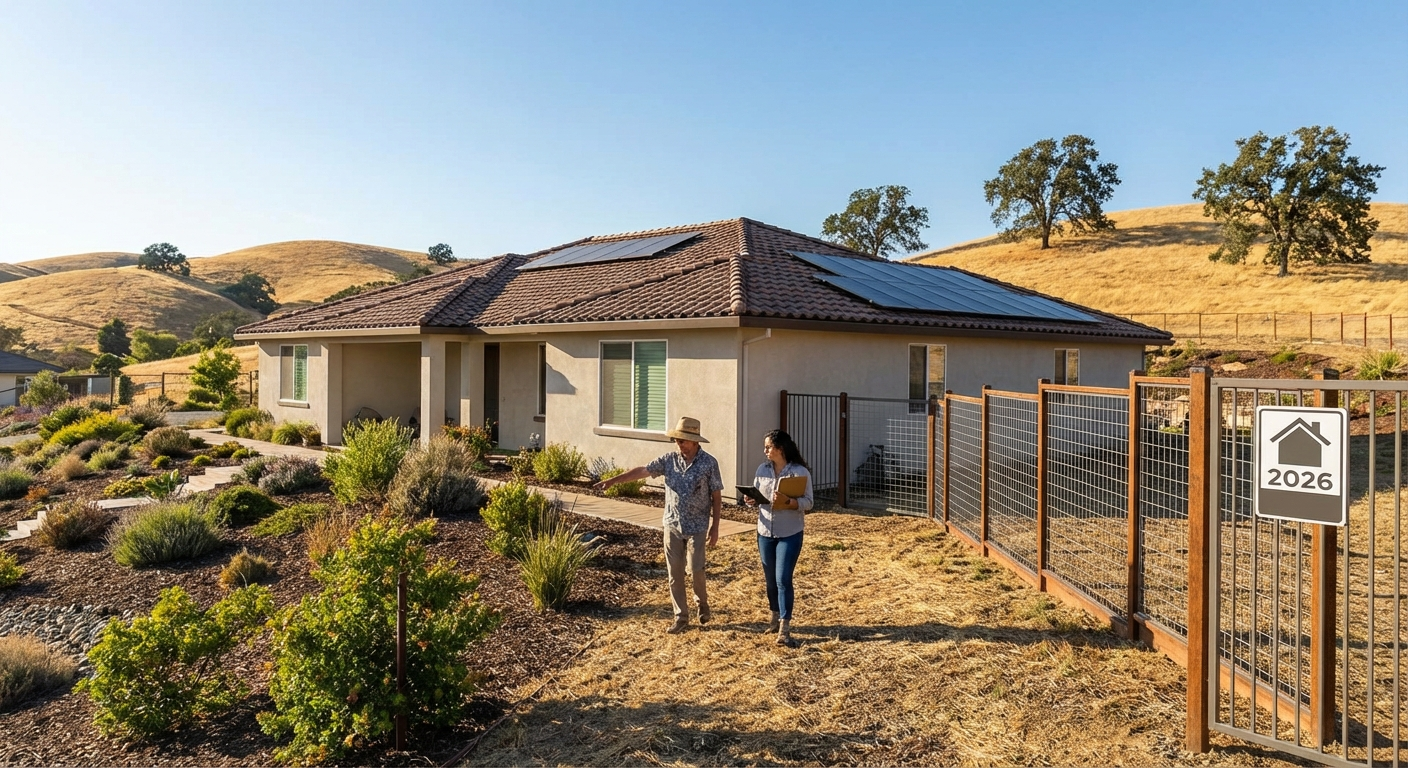
Here’s where 2026 really starts to shake things up. For years, insurers have used their own secret sauce — proprietary models — to assess wildfire risk. It was a black box for most homeowners. But under the new regulations from Commissioner Lara’s office, insurers will be required to use more transparent, science-backed wildfire models. Which brings up something most people miss: these models will also have to give credit for mitigation efforts.
What does that mean for you? It means your home’s vulnerability to wildfire isn’t just a fixed address anymore. It’s a dynamic score, and you can improve it. Insurers will be looking for specific actions you’ve taken to harden your home and create defensible space. If you want a policy, especially a well-priced one, these steps are quickly becoming de facto requirements.
Home Hardening: Making Your Home Fire-Resistant
Think of home hardening as making your home a tough nut to crack for embers and flames. It includes things like:
- Fire-Resistant Roofing: Class A rated materials are key. Embers can travel for miles, landing on your roof and igniting it.
- Vents: Upgrading to 1/8-inch mesh vents can prevent embers from entering your attic or crawl spaces.
- Siding: Non-combustible siding materials like stucco or fiber cement are far better than wood.
- Windows: Multi-pane, tempered glass windows can resist heat better.
- Decks and Fences: Using fire-resistant materials or maintaining clear zones around these can make a big difference.
Defensible Space: Your Home’s Safety Buffer
This is about creating zones around your home that reduce fuel for a fire. CAL FIRE has guidelines, and insurers will increasingly expect you to follow them:
- Zone 0 (0-5 feet from home): No combustible materials. Think gravel, concrete, or well-maintained hardscaping.
- Zone 1 (5-30 feet): Lean, clean, and green. Remove dead plants, prune trees, keep grass short.
- Zone 2 (30-100 feet): Reduce fuel. Thin out dense vegetation, remove lower branches from trees.
If you’re in a high-risk area, proving you’ve done this work could be the difference between getting a standard policy and being forced onto the FAIR Plan. You’ll likely need documentation, photos, and maybe even a professional assessment to show your insurer.
Beyond the Basics: Earthquake and Flood Insurance
These two are often confused with standard home insurance, but they’re separate policies entirely. They’re not “required” by lenders in the same way dwelling coverage is, but not having them in California? That’s a huge gamble.
Earthquake Insurance: A Separate (But Smart) Purchase
California sits on a lot of fault lines. We all know that. Yet, only about 13% of homeowners actually carry earthquake insurance. Why? It’s often expensive, comes with high deductibles (often 10-25% of your dwelling coverage), and many people figure they’ll just ride it out. But a big one, like the predicted “Big One” on the San Andreas, could devastate entire regions like the Valley or the Inland Empire.
Earthquake insurance is offered primarily through the California Earthquake Authority (CEA), though some private insurers offer it as well. It covers damage to your home and belongings from seismic activity. While not mandatory, if you live in a seismically active area — which is most of California — it’s a conversation you really should have with an agent.
Flood Insurance: Don’t Get Caught Off Guard
You might think, “I don’t live near a river, so I don’t need flood insurance.” But that’s not the whole story. Flooding can happen from heavy rains overwhelming drainage systems, mudslides, or even broken pipes if the damage isn’t contained. Standard home insurance policies specifically exclude flood damage.
Most flood insurance policies are backed by the National Flood Insurance Program (NFIP), though private options exist. If you’re in a federally designated high-risk flood zone, your lender will absolutely require it. But even if you’re not, consider the risks. With changing weather patterns, areas previously thought safe can suddenly become vulnerable.
The FAIR Plan: Your Last Resort (For Now)
If you’ve been dropped by your insurer or can’t find coverage in the traditional market, you’ll likely hear about the California FAIR Plan. It’s the state’s “insurer of last resort.” The short answer is yes, it’s there to provide basic fire coverage when no one else will. The real answer is more complicated.
The FAIR Plan offers dwelling fire coverage, meaning it’s pretty bare-bones. It covers fire, lightning, internal explosion, and smoke. It does NOT include liability, theft, or water damage — all things you’d expect in a standard homeowners policy. You can purchase supplemental coverage, called a “Difference in Conditions” (DIC) policy, from a private insurer to fill in those gaps. But wait — the FAIR Plan is often more expensive, and it’s not designed to be a permanent solution.
The state is working on reforms to the FAIR Plan too, aiming to make it more comprehensive and less expensive, but those changes are still in progress. For 2026, expect it to remain a viable, albeit limited, option for many homeowners in high-risk areas.
Finding Your Way: Why an Expert Matters More Than Ever
All these changes, new regulations, and mitigation requirements can feel overwhelming. It’s not just about finding the cheapest policy anymore; it’s about finding ANY policy that actually protects you. That’s where an independent insurance agent becomes invaluable. They work with multiple carriers, not just one, and they understand the nuances of the California market.
Someone like Karl Susman at Los Angeles Home Insurance Quotes (CA License #OB75129) has been helping California homeowners navigate these choppy waters for years. He and his team know which insurers are writing in which areas, what specific mitigation efforts they’re looking for, and how to combine policies (like a FAIR Plan with a DIC) to get you the best coverage possible. Don’t try to figure this out alone.
If you’re feeling lost, or just want to make sure you’re ready for 2026, it’s time to talk to a professional. You can start by getting a personalized assessment and quote right now: https://susmaninsurance.com/get-a-quote/.
Preparing for 2026: Your Action Plan
You don’t have to wait for the new year to roll around. Here are some immediate steps:
- Review Your Current Policy: Understand what you have, what your deductibles are, and when your policy renews.
- Assess Your Home’s Wildfire Risk: Honestly evaluate your property’s defensible space and home hardening features. What improvements can you make?
- Document Everything: Keep records of any home hardening projects, defensible space maintenance, and photos of your property. This documentation will be gold when applying for or renewing policies.
- Get Multiple Quotes: Don’t settle for the first offer. The market is dynamic, and different insurers have different appetites for risk.
- Talk to an Independent Agent: Seriously, this is the most important step. They can help you understand the specific requirements for your area and connect you with the right solutions.
The landscape of California home insurance is undeniably challenging right now. But with the right information and guidance, you can absolutely secure the protection your home deserves. Don’t let uncertainty leave you exposed. Take action. Get informed. Get help. Your home is worth it.
Ready to get started? Karl Susman and the team at Los Angeles Home Insurance Quotes are here to help. Get a quote today and secure your peace of mind: https://susmaninsurance.com/get-a-quote/.
Frequently Asked Questions About California Home Insurance in 2026
Will my home insurance premium go up in 2026?
Honestly, it’s likely. With rising reconstruction costs, increased wildfire risk, and the state’s efforts to stabilize the market by allowing insurers to factor in more future risk, most homeowners should expect to see increases. However, proactive mitigation efforts could help offset some of those costs by qualifying you for discounts.
Are wildfire mitigation efforts truly mandatory for getting insurance in California?
No, not legally mandatory in the sense that the state will fine you. But they are becoming a de facto requirement if you want to find an affordable policy in the traditional market, especially in high-risk areas. Insurers will increasingly offer discounts and even require proof of mitigation to write new policies or renew existing ones under the new regulations.
What if I can’t find any insurance companies willing to cover my home?
If you’ve been turned down by multiple private insurers, the California FAIR Plan is designed to be your option of last resort. It provides basic fire coverage. You’ll likely need to purchase a separate “Difference in Conditions” (DIC) policy to cover other perils like liability, theft, and water damage. It’s not ideal, but it’s better than nothing.
Is earthquake insurance required by my mortgage lender in California?
No, earthquake insurance is not typically a mandatory requirement from mortgage lenders, unlike standard dwelling coverage. However, given California’s seismic activity, it’s a highly recommended separate purchase. Your lender might suggest it, but they won’t force you to buy it.
How can an independent insurance agent help me with 2026 requirements?
An independent agent, like Karl Susman (CA License #OB75129) at Los Angeles Home Insurance Quotes, works with many different insurance carriers. They can shop around for you, explain the specific requirements and discounts available from various insurers, and help you combine policies (like a FAIR Plan with a DIC) to ensure comprehensive coverage. They understand the market complexities better than a single-carrier agent.
This article is for informational purposes only and does not constitute financial advice.