
What You’ll Learn:
- Why California home insurance is getting tougher to find and afford.
- How new state rules mean insurers *must* offer discounts for wildfire mitigation.
- The step-by-step actions you can take to harden your home against wildfire.
- How to create effective defensible space around your property.
- What documentation you’ll need to prove your efforts.
- How an independent agent, like Karl Susman, can help you find the best rates.
Why Wildfire Mitigation Matters More Than Ever for Your Wallet
For most California homeowners, the past few years have felt like a punch to the gut when it comes to insurance. Premiums jumped 40% between 2022 and 2024 for many, sometimes even more. Insurers like State Farm and Allstate have pulled back, refusing new policies in fire-prone areas. It’s not just a rumor; it’s a crisis playing out across Ventura County, the Inland Empire, and even parts of the Valley.
Honestly, insurers aren’t being malicious. They’re looking at the raw numbers. The 2025 LA fires, the devastating Camp Fire, the Tubbs Fire – these aren’t isolated incidents. They represent billions in losses. So, companies are either raising rates dramatically, limiting coverage, or leaving the state altogether. It’s a tough situation for everyone.
But here’s where it gets interesting. California’s Insurance Commissioner, Ricardo Lara, working under the framework of Proposition 103, has been pushing for change. He’s demanded that insurers not just raise rates, but also reward homeowners who take proactive steps to reduce their wildfire risk. This isn’t just about saving your home; it’s about saving on your policy.
Understanding California’s New Mitigation Discount Rules
For years, homeowners in high-risk areas felt stuck. They’d clear brush, harden their homes, and still see their premiums climb or their policies non-renewed. There wasn’t a clear, consistent way for insurers to recognize those efforts.
That’s not the whole story anymore. In 2022, the California Department of Insurance (CDI) adopted new regulations, often called the “Wildfire Safety Regulations.” These rules require insurance companies to offer discounts to homeowners who take specific, recognized actions to protect their properties from wildfire. It’s a big deal. Insurers can’t just ignore your efforts now.
The rules are largely based on the “Safer from Wildfires” framework, developed by CAL FIRE, the CDI, and the Office of Emergency Services. This framework lays out clear, science-backed mitigation actions for both home hardening and defensible space. If your home meets these standards, you’re in a much stronger position to demand a discount.
Step 1: Assess Your Home’s Current Wildfire Risk
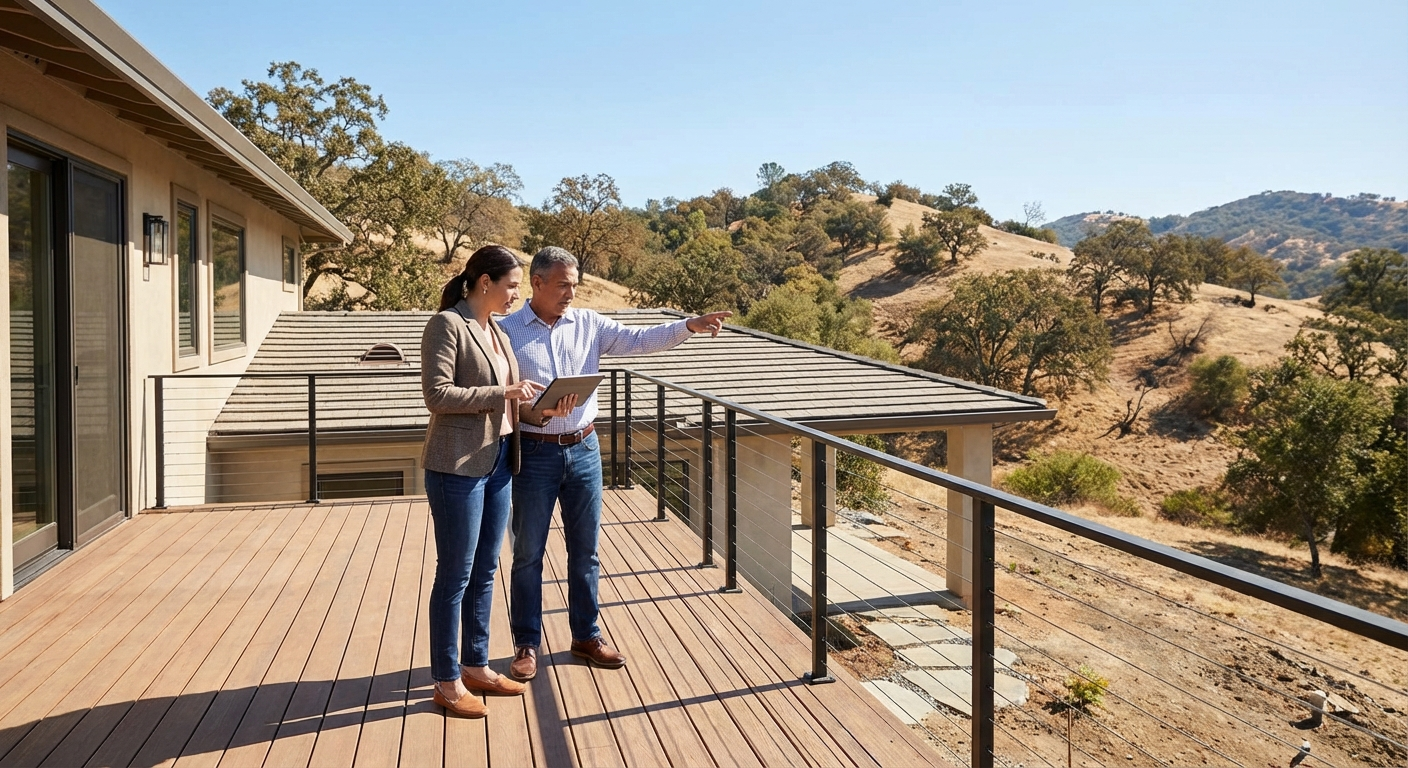
Before you start tearing out landscaping or replacing windows, you need to know where you stand. What are your home’s biggest vulnerabilities? What does the area around it look like?
Sometimes, a professional assessment can be incredibly helpful. Local fire departments or private consultants might offer these. They’ll walk your property and point out specific risks. Other times, you can do a pretty good self-assessment. Walk around your house, looking at the roof, the vents, the plants nearby, and the trees further out. Pretend you’re an ember, looking for a place to land and start a fire. Where would you go?
Think about the three key defensible space zones — we’ll get into those in detail soon — and how your property measures up. Is there anything combustible right up against your house? Are tree branches touching your roof? A clear picture of your current situation is the first step toward a safer home and a lower premium.
Step 2: Focus on Home Hardening – The Foundation of Safety (and Savings)
Home hardening is all about making your house itself resistant to embers and radiant heat. Most homes don’t burn down because of a direct flame front. They burn because tiny, wind-blown embers land on a vulnerable spot and ignite. Stopping those embers is key.
Roof and Vents: Your First Line of Defense
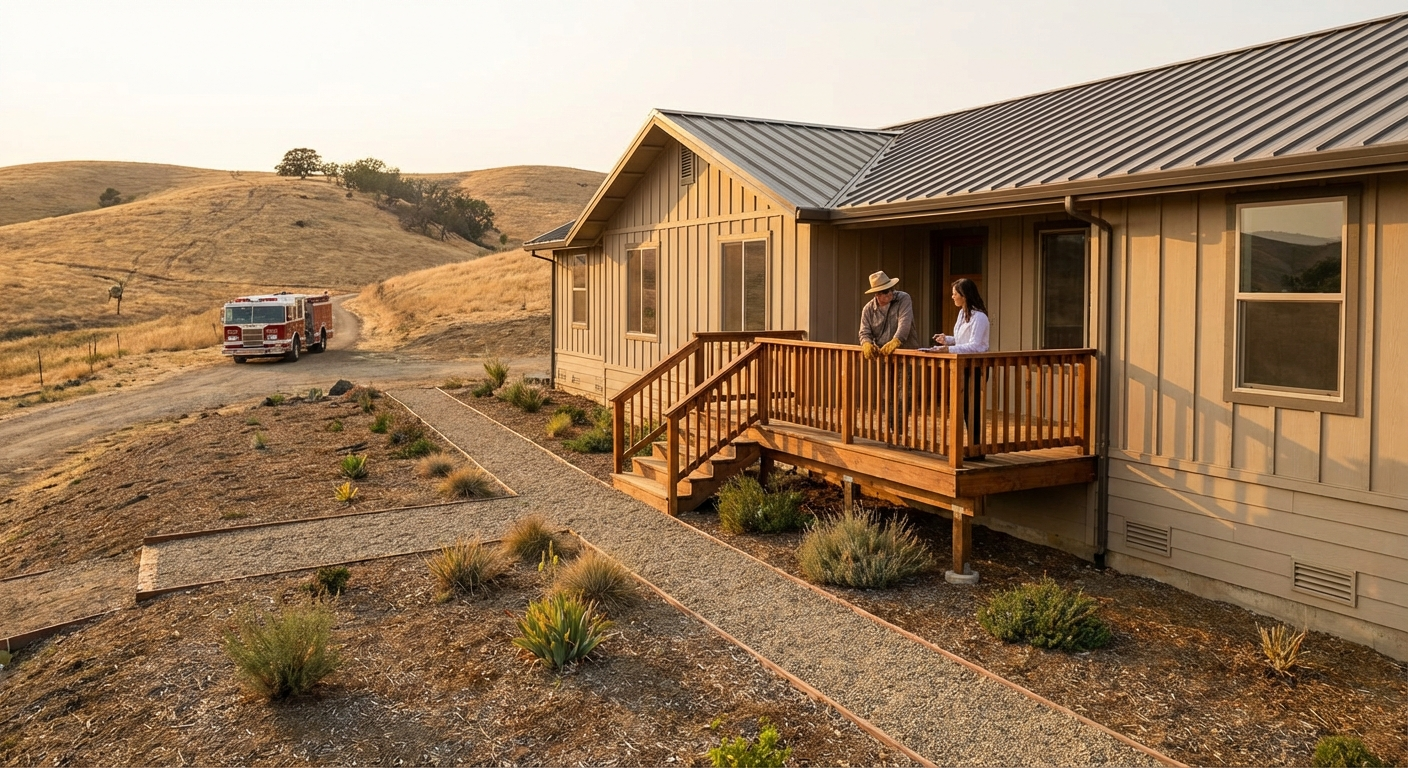
Your roof is the largest surface area of your home, and it’s a prime target for embers. If you’ve got an old wood shake roof, that’s a huge problem. You’ll want a Class A fire-rated roof. Think asphalt composition shingles, metal, or tile. These materials resist ignition.
But wait — it’s not just the roof material. Vents are critical. Attic vents, foundation vents, even dryer vents. Embers can easily blow into these openings and ignite insulation or wood framing inside your house. Install fine mesh screens – 1/8 inch or smaller – over all exterior vents. This keeps embers out without blocking airflow.
Windows and Doors: Blocking the Embers
Single-pane windows can shatter from intense heat, letting flames or embers inside. Dual-pane windows with tempered glass offer much better protection. For doors, especially those facing potential wildfire approach, solid core doors are best. Make sure they fit snugly, and add weatherstripping to seal any gaps. Even small gaps can let embers in.
Eaves and Overhangs: Hidden Vulnerabilities
Open eaves — where the rafters are exposed — can collect embers and provide a direct path to your attic. Boxing in your eaves with ignition-resistant materials creates a much safer barrier. It’s a detail many homeowners miss, but it makes a big difference.
Decks and Fences: Not Just for Entertaining
Wooden decks and fences can act like a fuse, bringing fire right up to your house. Consider using ignition-resistant materials for new decks or replacing sections of existing ones, especially those closest to the house. Clear anything combustible from underneath your deck. Also, disconnect any wooden fences from your home’s exterior. Leave a gap, maybe with a non-combustible gate, so a burning fence doesn’t ignite your siding.
Step 3: Master Defensible Space – Creating a Buffer Zone
Defensible space isn’t just about clearing brush far away. It’s a layered approach, starting right at your foundation.
Zone 0 (0-5 feet): The Ember-Resistant Zone
This is the most critical zone, sometimes called the “ember-free zone.” Absolutely nothing combustible should be in this area. We’re talking about gravel, concrete, pavers, or inorganic mulch. No plants, no wood mulch, no firewood piles, no outdoor furniture made of flammable materials. This zone acts as a buffer, stopping embers from igniting anything right next to your home.
Zone 1 (5-30 feet): Lean, Clean, and Green
Here, you want well-maintained, irrigated landscaping. Plants should be spaced out, not in continuous beds. Remove all dead or dying vegetation. Prune tree branches up to 6 feet from the ground, or one-third of the tree’s height, whichever is less. This prevents ground fires from climbing into tree canopies – a phenomenon called “ladder fuels.” Keep lawns mowed short. Consider fire-resistant plant species, but remember, any plant can burn if it’s dry enough.
Zone 2 (30-100 feet): Reduced Fuel Zone
This zone is about reducing the intensity of a wildfire before it reaches Zone 1. Thin out dense stands of trees and shrubs. Remove dead trees and excessive brush. Maintain vertical and horizontal spacing between plants. Again, prune up lower tree branches. This zone doesn’t need to be manicured like a park, but it shouldn’t be a dense, continuous fuel source either.
Step 4: Document Your Efforts – Proof is Power
You’ve put in the work, maybe spent some money. Now you need to prove it to your insurance company. Without solid evidence, they can’t verify your mitigation and won’t apply those discounts.
Start with photos. Take “before” pictures of areas you plan to improve, then “after” pictures once the work is done. Make sure the photos are clear, dated, and show the specific changes. Keep receipts for any materials you bought – Class A roofing, fine mesh screens, ignition-resistant decking. If you hired contractors, hold onto their invoices and work orders.
Some communities have programs through their local Fire Safe Council that offer certifications for defensible space. If your area has one, getting certified is excellent documentation. A professional wildfire risk assessment report, if you had one done, also serves as strong evidence.
Step 5: Talk to Your Insurance Agent – Your Advocate in the Wildfire Maze
This is where an experienced, independent insurance agent becomes your best friend. Why? Because they work for you, not one specific insurance company. An agent like Karl Susman understands the California market, knows which insurers are offering the best wildfire mitigation discounts, and how to present your efforts effectively.
Karl Susman, with Los Angeles Home Insurance Quotes (CA License #OB75129), has seen firsthand the challenges California homeowners face. He can shop around, compare policies, and help you understand the specific requirements each insurer has for mitigation discounts. Don’t just accept the first quote you get, especially if you’ve done the work to harden your home. An agent can translate your mitigation efforts into real savings.
Ready to see what discounts you qualify for? Don’t wait. Get a home insurance quote today.
What to Expect When Applying for Discounts
Even with the new regulations, the process isn’t always instant or perfectly uniform. Not all insurers offer the *exact* same discounts, though they must offer *some* based on the “Safer from Wildfires” framework. Some might require an on-site inspection by their own adjusters or a third-party vendor. This inspection will verify your claims about home hardening and defensible space.
Sometimes, there’s a bit of a wait. The insurance company needs to process your documentation and schedule any necessary inspections. Be patient, but also be persistent. Follow up with your agent if you haven’t heard back within a reasonable timeframe.
Which brings up something most people miss. Even if you’re on the FAIR Plan – California’s “insurer of last resort” – mitigation efforts can still help. While the FAIR Plan might not offer direct “discounts” in the same way private insurers do, proving you’ve reduced your risk can make it easier to get coverage or potentially transition back to a private market insurer later on.
Beyond the Discount: The Real Value of Mitigation
Sure, saving money on your home insurance premium is a fantastic incentive. In today’s California, every dollar counts. But the true value of wildfire mitigation goes far beyond that.
It’s about protecting your family, your pets, and your most valuable asset – your home. It’s about reducing the stress and fear that comes with living in a high-risk area. It’s about making your property more resilient, more likely to survive if a wildfire does approach. And it’s about contributing to the safety of your entire community. When more homes are hardened and more defensible space is created, the risk for everyone nearby goes down. This isn’t just a personal benefit; it’s a community benefit. Long-term, these efforts make your home more insurable, no matter how the market shifts.
Frequently Asked Questions About Wildfire Mitigation Discounts
Do all insurers offer these discounts?
Yes, under California’s new Wildfire Safety Regulations, all admitted insurers *must* offer discounts for wildfire mitigation efforts that align with the “Safer from Wildfires” framework. The specific amount and criteria might vary by company, but the discounts are mandatory.
How much can I save on my premium?
The amount you can save varies widely. It depends on the extent of your mitigation efforts, your home’s specific risk profile, and the individual insurance company. Some homeowners report savings of 5% to 15% or more. The most significant savings often come from a combination of extensive home hardening and comprehensive defensible space.
What if I can’t afford all the upgrades at once?
That’s a common concern. Start with the most impactful and often least expensive changes first. Clearing Zone 0 (0-5 feet) and screening vents are usually good starting points. Then, tackle bigger projects as your budget allows. Even partial mitigation can sometimes lead to partial discounts or at least improve your insurability. An agent can help prioritize.
Does mitigation guarantee I won’t lose my home to a wildfire?
Unfortunately, no. Wildfires are incredibly powerful and unpredictable. However, mitigation dramatically increases your home’s chances of survival. It creates a much stronger defense against embers and radiant heat, which are the primary causes of home ignition during a wildfire.
How often do I need to re-certify my mitigation efforts?
Insurers typically require periodic re-certification or verification of your mitigation efforts, often every 1-3 years. This ensures that your defensible space is maintained and that any home hardening elements are still in good condition. Your insurance agent can confirm the exact schedule for your specific policy.
Ready to explore your options and find out how much you can save? Get a personalized home insurance quote and connect with an expert today.
This article is for informational purposes only and does not constitute financial advice.