
Sinkholes in California: What Your Home Insurance Might (or Might Not) Cover
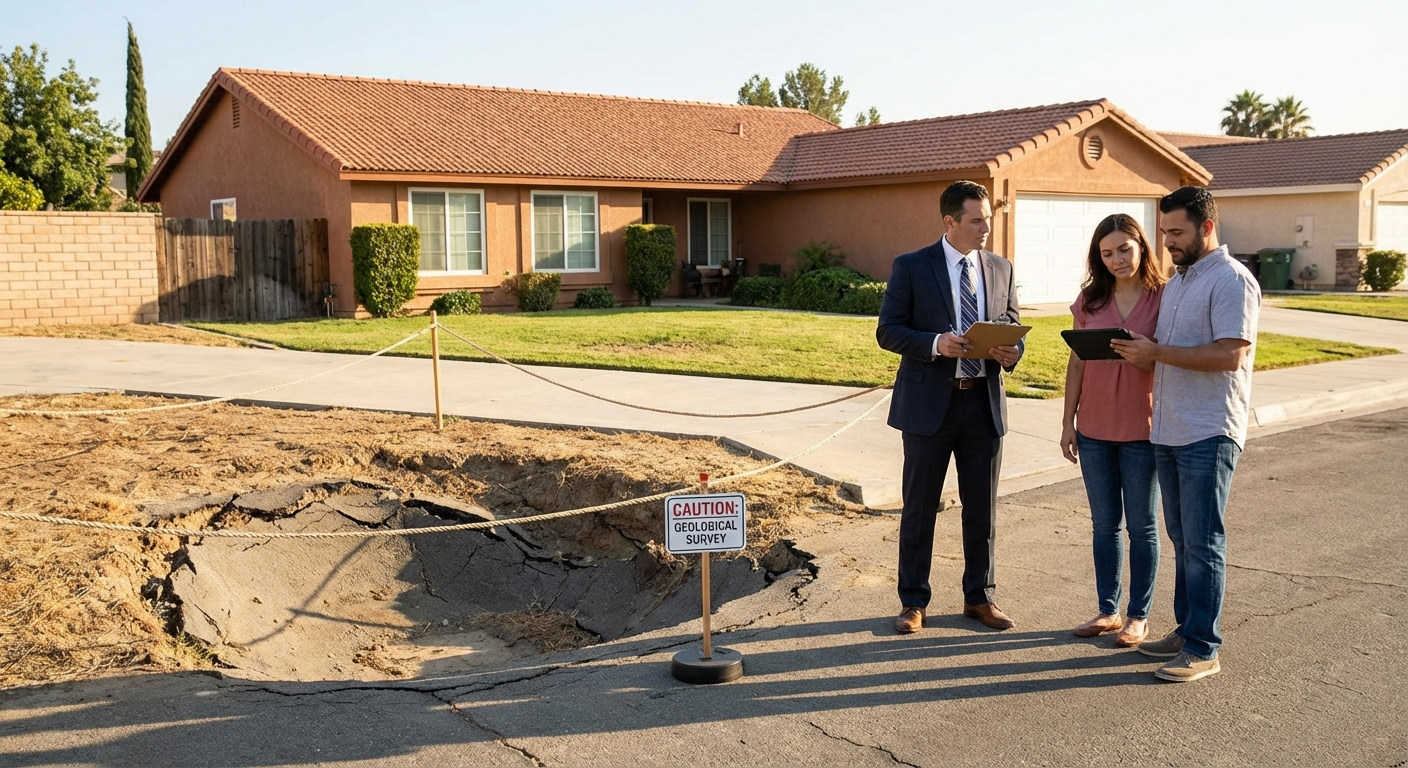
For most California homeowners, the thought of a sinkhole probably conjures images of Florida or Kentucky. You picture giant chasms swallowing cars and houses whole. Honestly, it’s not a common worry out here. Our geology is different. We’re more concerned with earthquakes, wildfires, and mudslides. But does that mean sinkholes aren’t a thing in the Golden State? Not exactly. And when they do happen, they can be devastating.
So, what happens if your home starts sinking? Is your homeowners insurance going to bail you out? The short answer is often “no.” The real answer, like most things with insurance, is more complicated.
Are Sinkholes Even a Real Threat in California?
You’re right to question it. We don’t have the same vast underground limestone formations that make sinkholes so prevalent in other parts of the country. But that doesn’t mean we’re immune. California has its own unique set of geological challenges.
Think about our intense rainy seasons, especially after a long drought. All that water can saturate the soil, washing away loose sediment or eroding underground pipes. This can create voids beneath the surface. Old mining operations, especially in places like the Sierra Nevada foothills or even parts of the Inland Empire, can also leave behind unstable ground. We’ve seen localized subsidence — a fancy word for ground sinking — in areas like the San Joaquin Valley due to excessive groundwater pumping. It’s not always a sudden, dramatic collapse. Sometimes it’s a slow, insidious process.
Sometimes, what looks like a sinkhole is actually a collapsed utility pipe or a poorly compacted fill area. These are different issues entirely, and how your policy treats them can vary wildly.

Standard Home Insurance and “Earth Movement”
Most standard homeowners insurance policies in California — the HO-3 kind that covers most single-family homes — come with a long list of what they *won’t* cover. Near the top of that list, you’ll almost always find an exclusion for “earth movement.”
What does “earth movement” mean? It’s a broad term. It usually includes things like earthquakes, landslides, mudslides, and yes, sinkholes. This means if your house suddenly drops into a hole, your basic policy probably isn’t going to pay for the repairs. It’s a tough pill to swallow, especially when you’re looking at hundreds of thousands of dollars in damage.
But here’s the thing. Not all ground movement is treated the same.
The Tricky Distinction: Sinkhole vs. Subsidence vs. Collapse
Insurance companies are sticklers for definitions. A true “sinkhole” is usually defined as a geological formation caused by the dissolution of soluble bedrock (like limestone) that creates a depression or collapse. As we discussed, that’s less common here.
What’s more common in California is *subsidence* — the gradual sinking of land. This might be due to water erosion, poor soil compaction, or even seismic activity. Most policies exclude subsidence too.
Which brings up something most people miss. If the ground collapses because of a burst water pipe under your house, that might be covered. Why? Because the *cause* was a sudden, accidental plumbing event, not natural earth movement. But if the ground just gives way due to saturated soil from a normal rainstorm, that’s usually excluded. See? It’s a big difference, and it’s where having an expert on your side really helps.
Can You Get Sinkhole Coverage in California?
Yes, you can. But it’s not typically a standalone policy you just grab off the shelf. For most homeowners, it comes as an *endorsement* — an add-on — to your existing policy.
This endorsement specifically overrides the “earth movement” exclusion for sinkhole damage. It’s often called “Earth Movement Coverage” or “Subsidence Coverage.” Don’t expect it to be cheap, especially if you live in an area with any history of soil instability or old mining activity. Insurers are in the business of assessing risk, and if your property has a higher chance of sinking, they’ll charge you for it.
Sometimes, this coverage might be bundled with a broader “Difference in Conditions” (DIC) policy. A DIC policy is a specialized type of insurance that fills gaps in standard policies, often covering perils like earthquakes, landslides, and sometimes, sinkholes. These are usually purchased in addition to your basic homeowners policy.
What About Earthquake Insurance? Does That Cover Sinkholes?
A common misconception. Earthquake insurance, usually purchased through the California Earthquake Authority (CEA) or a private insurer, covers damage *directly caused by an earthquake*. A sinkhole that opens up years later due to unrelated geological factors? Not covered. A sinkhole that forms *during* an earthquake? That’s a trickier question, and it often depends on the specific wording of your earthquake policy and how the damage is assessed. Generally, if the primary cause is *not* the shaking itself, earthquake coverage won’t kick in.
The Cost of Peace of Mind
How much does this extra coverage cost? There’s no single answer. It depends on several factors:
* **Your property’s location:** Is it in an area known for unstable soil, old landfills, or historical mining?
* **The age and construction of your home:** Older homes with shallow foundations might be seen as higher risk.
* **The insurer:** Different companies have different appetites for this kind of risk. State Farm, AAA, Farmers — they all underwrite differently.
* **The amount of coverage you need:** Higher dwelling coverage means a higher premium for the endorsement.
Honestly, it can add a significant chunk to your annual premium. But for some homeowners, especially those who’ve done their research and know their property sits on questionable ground, it’s a necessary expense.
If you’re wondering about the cost or what options are available for your specific property, you shouldn’t just guess. You need to talk to someone who understands the California market. Karl Susman at Los Angeles Home Insurance Quotes (CA License #OB75129) has been helping California homeowners for years. He knows the ins and outs of these less common coverages. You can reach out to him at (877) 411-5200.
What If I Don’t Get the Coverage and a Sinkhole Happens?
Without specific sinkhole or earth movement coverage, you’re likely on your own. This means you’d be responsible for the full cost of repairing your home and stabilizing the land. That’s a financial hit that could easily bankrupt most families. We’re talking about excavation, structural engineers, foundation repair, maybe even demolition and rebuilding. It’s not a small fix.
That’s why it’s so important to understand your policy. Don’t assume anything. Read the exclusions. Ask questions.
Here’s where it gets interesting. If the sinkhole was caused by negligence — say, a city utility pipe burst and wasn’t repaired properly, eroding the soil — you might have a claim against the responsible party. But proving that can be a long, expensive legal battle. Your insurance company won’t fight that battle for you if the damage isn’t covered by your policy.
Finding the Right Protection for Your California Home
California’s unique geology and weather patterns mean that homeowners here face a different set of risks than those in other states. While sinkholes might not be our most common threat, they are a real possibility, and the damage they cause can be catastrophic.
Don’t leave your biggest asset exposed to a risk you didn’t even know you had. Talk to an expert who knows California insurance inside and out. They can help you understand your specific risks and find the right endorsements or policies to protect your home.
Ready to explore your options for sinkhole or earth movement coverage? Get a personalized quote today and make sure your home is truly protected: Get Your Home Insurance Quote Now
Frequently Asked Questions About Sinkhole Coverage in California
Q: Is sinkhole damage covered by my standard California homeowners policy?
A: Generally, no. Most standard homeowners policies in California exclude damage caused by “earth movement,” which typically includes sinkholes, landslides, and subsidence.
Q: How can I get coverage for sinkholes in California?
A: You can usually add coverage for sinkholes and other earth movement as an endorsement to your existing homeowners policy. Sometimes, it might be part of a broader “Difference in Conditions” (DIC) policy, which covers perils excluded by standard policies.
Q: What’s the difference between a sinkhole and subsidence?
A: A sinkhole is typically a sudden collapse caused by the dissolution of soluble bedrock. Subsidence is a more gradual sinking of the land, often due to soil compaction, erosion, or groundwater depletion. While distinct geologically, both are usually excluded under the “earth movement” clause of standard home insurance policies.
Q: Does earthquake insurance cover sinkholes?
A: No. Earthquake insurance covers damage directly caused by seismic activity. A sinkhole that forms independently of an earthquake would not be covered by an earthquake policy.
Q: Will my premium go up if I add sinkhole coverage?
A: Yes, adding an endorsement for sinkhole or earth movement coverage will increase your premium. The exact cost depends on your property’s location, the perceived risk, and the insurer.
—
Ready to talk about your specific home insurance needs and ensure you’re covered for whatever California throws your way? Don’t wait until it’s too late. Get a personalized quote and speak with an expert like Karl Susman at Los Angeles Home Insurance Quotes (CA License #OB75129): Click Here for a Home Insurance Quote
This article is for informational purposes only and does not constitute financial advice.